
In this guide
- At a Glance
- Planning Uluwatu with kids around the whole day
- Choosing accommodation: ask questions that photographs cannot answer
- Beaches: access and conditions come before the ranking
- Cliffs, temples and cultural visits
- Food, breaks and a useful bag
- Transport: the questions I would ask before booking
- Frequently Asked Questions
Uluwatu with kids works best when you plan one main outing at a time and choose accommodation, transport and beach access around your family's actual needs. I would prioritise shade, manageable walking and an easy return over trying to fit the most famous places into every day.
I am Bugo from Pecatu and I work for BUGORIDE. That does not mean I recommend a buggy for every family. Suitable seating and restraints, the children's ages, luggage and the driver's confidence matter more than the style of the vehicle; ask specific questions before booking and choose another option when it fits better.
This guide is about practical family decisions, not a promise that every beach or attraction is suitable for every child. For the overall layout of the area, start with the Uluwatu travel guide, then use the questions below to make that plan work for your family.
At a Glance
- Daily pace: one main activity, with optional extras rather than fixed back-to-back bookings.
- Beach choice: assess today's conditions and the complete access route, including the return walk.
- Transport: confirm suitable restraints, passenger configuration and room for your belongings.
- Accommodation: ask about barriers, steps and the route between your room and shared facilities.
- Food: keep one convenient option and check dietary requirements directly with the venue.
- Contingency: know how you will leave early if someone is tired or uncomfortable.
- BUGORIDE delivery: discuss your address and date with the WhatsApp manager; do not assume inclusion.
Planning Uluwatu with kids around the whole day
The main activity is only one part of a family outing. There is getting ready, travelling, parking, walking, finding a toilet, eating and getting home. I would put those practical stages into the plan before deciding that a second attraction fits. A short-looking visit can occupy a substantial part of the day once all the transitions are included.
My first planning observation is that children and adults can mean different things by “a beach day”. One person imagines swimming, another wants to build in the sand, and another mostly wants lunch with a view. Ask each person what would make the outing enjoyable. You may discover that a simpler place suits everyone better than the famous one.
Choose a main stop that still works if you leave earlier than expected. Avoid building the whole day around a non-refundable second activity that requires everyone to stay cheerful on a strict timetable. Optional plans are useful because they give you somewhere to go if energy is high without creating a sense of failure if it is not.
For a longer stay, spread activities across the three-day itinerary, adapting the pace rather than following it literally. A morning at one beach and an afternoon at your accommodation is a complete holiday day. You do not have to fill every gap with another drive.
Choosing accommodation: ask questions that photographs cannot answer
Before booking, ask about the route from the entrance to your room. How many steps are involved? Can you manage it with a stroller and bags? Is there a place to wait in the shade while someone checks in? A room can look ideal while the access arrangement is inconvenient for your particular family.
Ask specifically about pools, balconies, stairs and barriers. Do not infer childproofing from a family-sized room or a photograph of children in a pool. Describe the ages and needs of your group and request current details. You can then decide whether the property matches the level of supervision and setup you are comfortable with.
Location affects ordinary moments as much as sightseeing. Think about an easy meal, buying something you forgot and returning for a rest. A dramatic remote view may be exactly what you want, but compare it with the extra journeys it creates. Neither choice is wrong; the important thing is understanding the tradeoff before arrival.
I would also confirm the arrival arrangements, especially after a flight. The airport transfer guide covers the information a driver needs. Share the exact pin and entrance instructions, and make sure the accommodation can receive you at the expected time. The first evening is easier when nobody is trying to solve access and dinner simultaneously.
Beaches: access and conditions come before the ranking
Use the beach guide to understand the different kinds of coast, then check conditions when you arrive. A beach described as popular with families is not automatically suitable for swimming that day. Follow posted warnings and local guidance, and choose a land-based activity when the water is unsuitable.
For the access route, consider the return while everyone still has energy. Steps that seem easy going down can be difficult after carrying bags and spending time outside. Think about how you would leave with a tired child, whether you need both hands free and where you could pause safely. If the answer is awkward, choose another stop.
At the beach, make supervision explicit. One adult should know they are watching the children in or near the water; it should not be a responsibility everyone assumes someone else has. Put phones and photography aside during that time, and make any handover clear. A convenient seat is one that helps you supervise, not simply the one with the best photograph behind it.
My Melasti and Pandawa comparison can help narrow two common options, but it cannot certify conditions. I would arrive prepared to change the plan. Sometimes sand, shade and lunch make the right outing even when swimming does not.
Cliffs, temples and cultural visits
At a clifftop site, stay on the designated route and keep children away from edges and barriers they could climb. Do not step outside a permitted area for a family photograph. A wide camera angle can make a place look less exposed than it is; assess the actual space rather than trying to reproduce an image.
For a temple visit, explain the setting before arriving. Respectful clothing, following access instructions and giving worshippers space are part of the visit, not inconveniences added to it. Keep loose belongings secured and do not encourage children to interact with monkeys for a photograph.
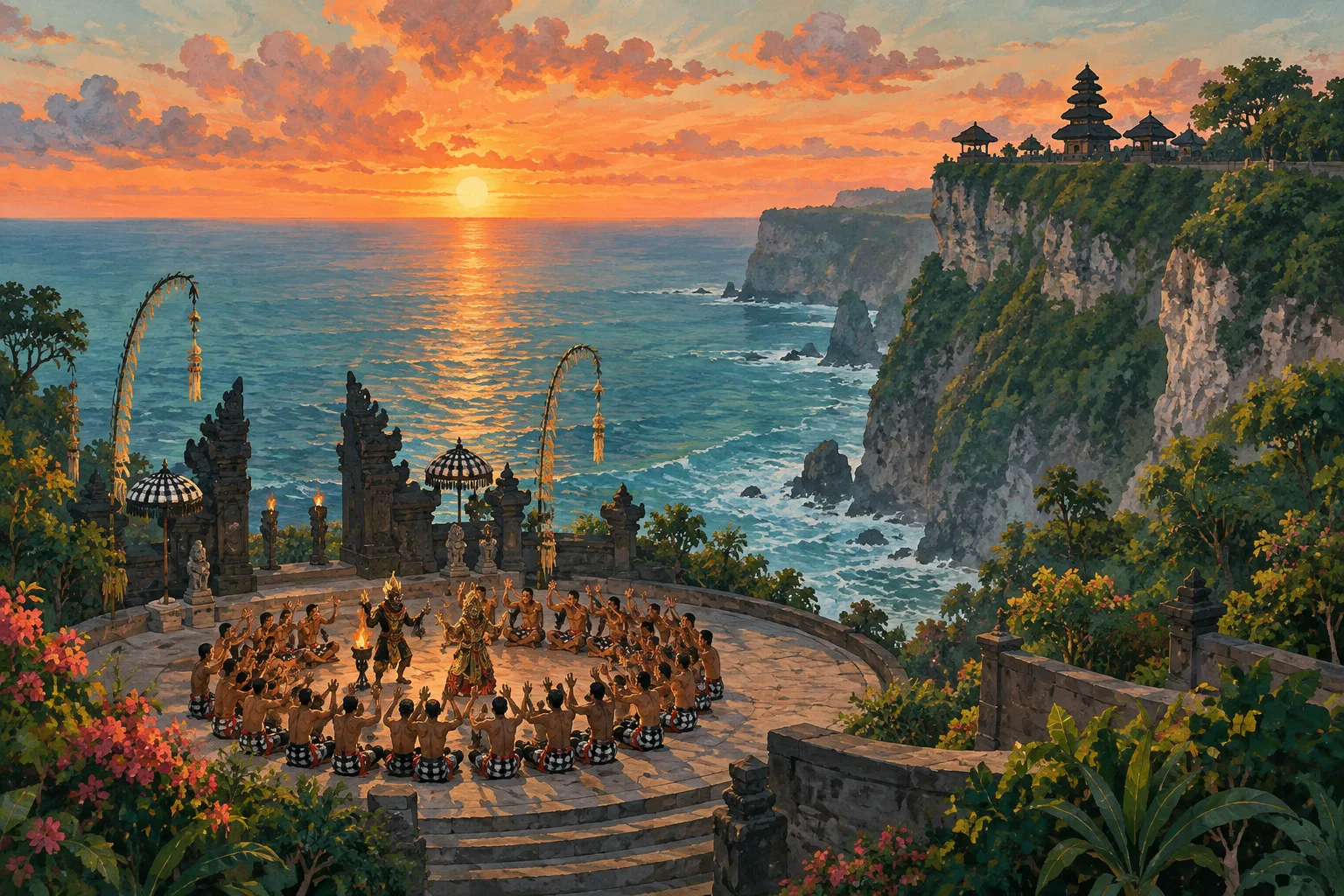
For the Uluwatu Kecak evening, ask about the current child ticket policy and seating arrangement. Think about your child's tolerance for crowds, noise and sitting through a performance. A child who enjoys an open daytime visit may find a structured evening different. There is no prize for staying when the experience is no longer comfortable.
For GWK Cultural Park, choose the particular activity you want rather than trying to cover every area. Ask the operator about walking, internal transport and the access conditions of any tour. Keep the return journey straightforward so you can finish when the group has had enough.
Food, breaks and a useful bag
Choose food around the day you are having, not around a list of places you feel obliged to try. The cafe guide and restaurant guide can help with ideas, but contact the venue about dietary needs, current menus and any equipment you require. Do not assume an old photograph confirms a high chair or children's menu today.
Carry the essentials your family normally relies on, with water and a change of clothes accessible rather than buried under everything else. A small separate bag for the most frequently used items can make transitions easier. Pack for the activity, but avoid bringing so much that managing the belongings becomes an activity of its own.
Plan a real pause rather than calling every drive a rest. Some children sleep in vehicles; others arrive more tired or uncomfortable. Build the day around what you know about your family, and be willing to return to the accommodation. A flexible lunch and an unhurried break can be more valuable than another attraction.
My second observation is about the final half hour. It is easy to stay until everyone is exhausted because the stop is going well. I would leave while packing up still feels manageable. Finishing on a good note is often what makes people want another outing tomorrow.
Transport: the questions I would ask before booking
Tell the provider how many adults and children are travelling, the children's needs and what equipment you are carrying. Ask about the actual seating configuration and suitable restraints. An “up to six” description does not tell you whether the vehicle is the right fit for your family or whether a specific child seat can be installed correctly.
At BUGORIDE, ask the manager on WhatsApp to confirm those details and the delivery arrangement for your address. I would not treat a general availability result as confirmation of a child-restraint setup. Get the relevant answer before committing, and inspect the agreed arrangement at handover.
A driver-operated enclosed car may be the better choice for a late arrival, substantial luggage or a day when no adult wants to drive. An open-air rental may suit a different outing once the vehicle requirements are confirmed. The transport comparison discusses broader options, but the family's practical needs should decide this booking.
Plan where the vehicle will wait or where you will be collected. Save the pickup pin, keep a contact method available and agree what happens if you leave early. If the day includes alcohol for the adults, arrange a driver. A clear return plan is part of the family outing, not something to improvise after dinner.
One useful preparation is a short shared message with the day's main stop, accommodation pin and driver contact. Give it to another adult in the group. If people briefly separate to buy food or take a child to the toilet, everyone still has the same plan. Keep it simple enough that you can find the important details without searching a long conversation.
I would also agree a stopping rule before leaving: if someone becomes too tired for the access route, or the conditions are unsuitable, the optional stop disappears. That removes the feeling that a person is spoiling the outing by asking to change it. The plan should serve the family, not require the family to perform for the plan.
Frequently Asked Questions
Is Uluwatu a good place to visit with kids?
It can be, with a pace and accommodation that suit your family. Plan around access, supervision, shade and an easy return. Do not assume every famous beach or clifftop attraction is suitable for every child.
Which beach should we choose?
Choose according to current conditions and the complete access route. Consider the return walk, shade and where you can supervise effectively. A general recommendation cannot replace the signs and conditions you find on arrival.
Can a child ride in a BugoRide buggy?
Ask the manager about the actual vehicle configuration and suitable restraint arrangement for your child before booking. Do not rely on the advertised passenger count as proof of suitability.
Should we bring a stroller?
Decide around the places you intend to visit and your normal family needs. Ask accommodation and attraction operators about steps and access. Do not assume all beach approaches or temple routes are stroller-friendly.
Is Kecak suitable for young children?
Ask the operator about ticket and seating conditions, then consider your child's comfort with crowds, noise and a scheduled evening. Keep transport flexible enough that you can leave if needed.
What should we do when the day is not going to plan?
Drop the optional stop, take a break or return to your accommodation. A quiet afternoon is a sensible holiday choice. Keep the main aim as a comfortable shared day rather than a completed checklist.
The best family itinerary is one everyone can enjoy at their own pace. Choose a few good experiences, confirm the practical details and leave room to change your mind. — Bugo